
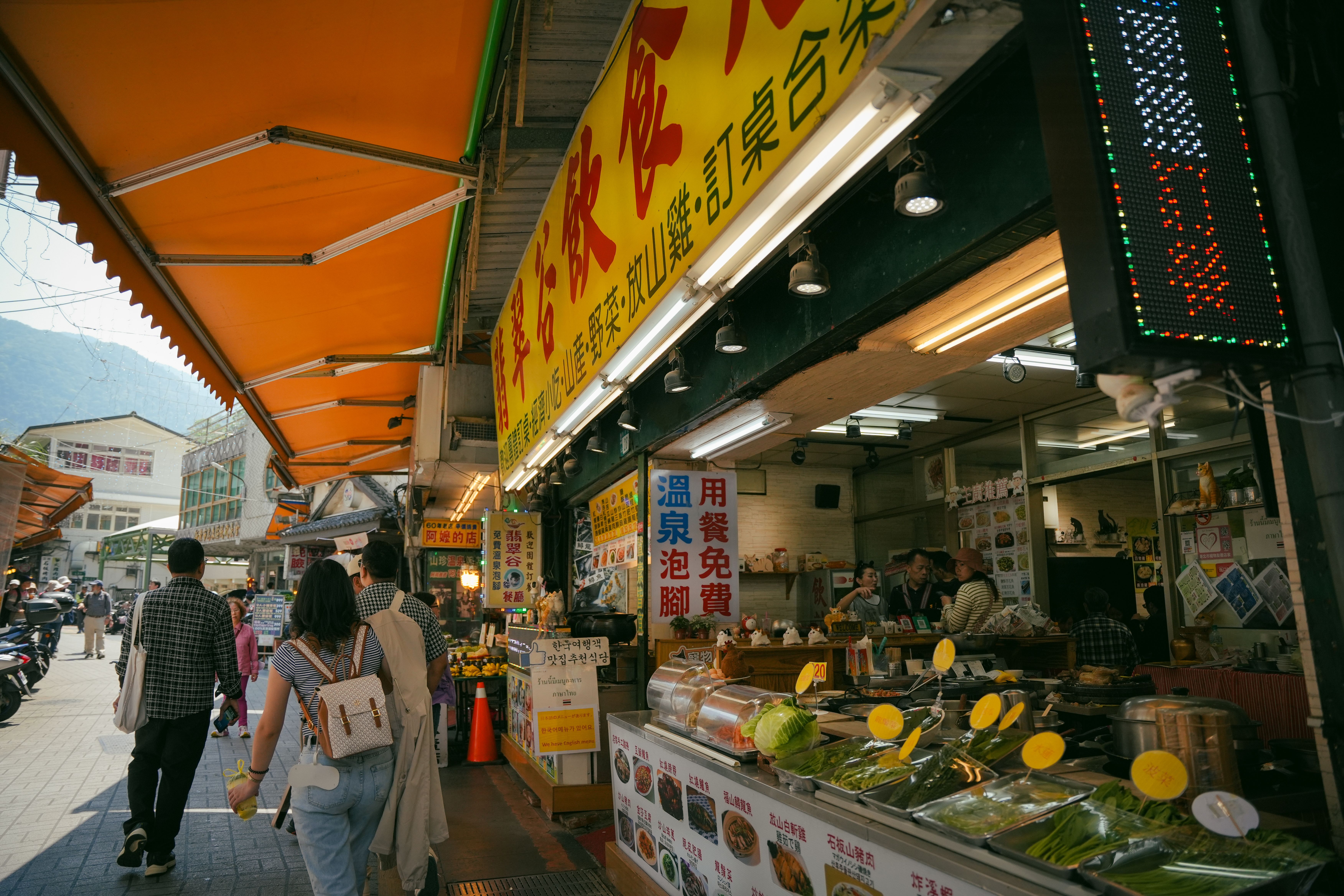
A street vendor produces a finished plate in under a minute, and the speed is often mistaken for skill in cooking quickly. What is actually happening is assembly.
The cooking happened hours earlier
The components on a stall have been prepared in a kitchen or at home, in bulk, over several hours before the cart reached its position.
Boiled potatoes, cooked pulses, fried elements, chutneys and spice mixtures all exist finished, waiting in containers arranged within arm's reach.
What the vendor performs in front of the customer is combination and finishing, which is a genuinely different task from cooking.
Layout is engineered for a fixed sequence
The arrangement of containers on a cart is not casual. It follows the order of assembly, so the vendor's hands move in a repeated path without searching.
Frequently used items sit closest, and the sequence is identical for every serving, which is what allows the movements to become automatic.
A vendor working a cart they did not set up themselves is noticeably slower, which demonstrates how much of the speed comes from the layout.
Portioning is done by tool, not by measurement
Each component has a dedicated spoon or scoop sized to its portion, so quantity is determined by the tool rather than by a decision.
This keeps servings consistent across hundreds of plates and removes any need to judge, which is where time would otherwise be lost.
It also makes costing precise, since a known number of servings comes out of a known quantity of prepared material.
The finishing steps carry the impact
What is added last is what the customer tastes first: raw onion, fresh coriander, a squeeze of citrus, a final dusting of spice, something crisp.
These are exactly the elements that would degrade if added earlier, which is why they are held separately and applied at the moment of serving.
The perceived freshness of street food comes largely from this last five seconds rather than from the components underneath it.
The model constrains what can be sold
Dishes that cannot be decomposed into a prepared base and a fast finish do not survive on a cart, regardless of how popular they might be.
This is why street food across very different cities converges on similar structures, with a starch base, a wet element, and a set of finishing contrasts.
It also explains why a home cook reproducing a street dish should prepare the components separately rather than cooking it as a single continuous process.