
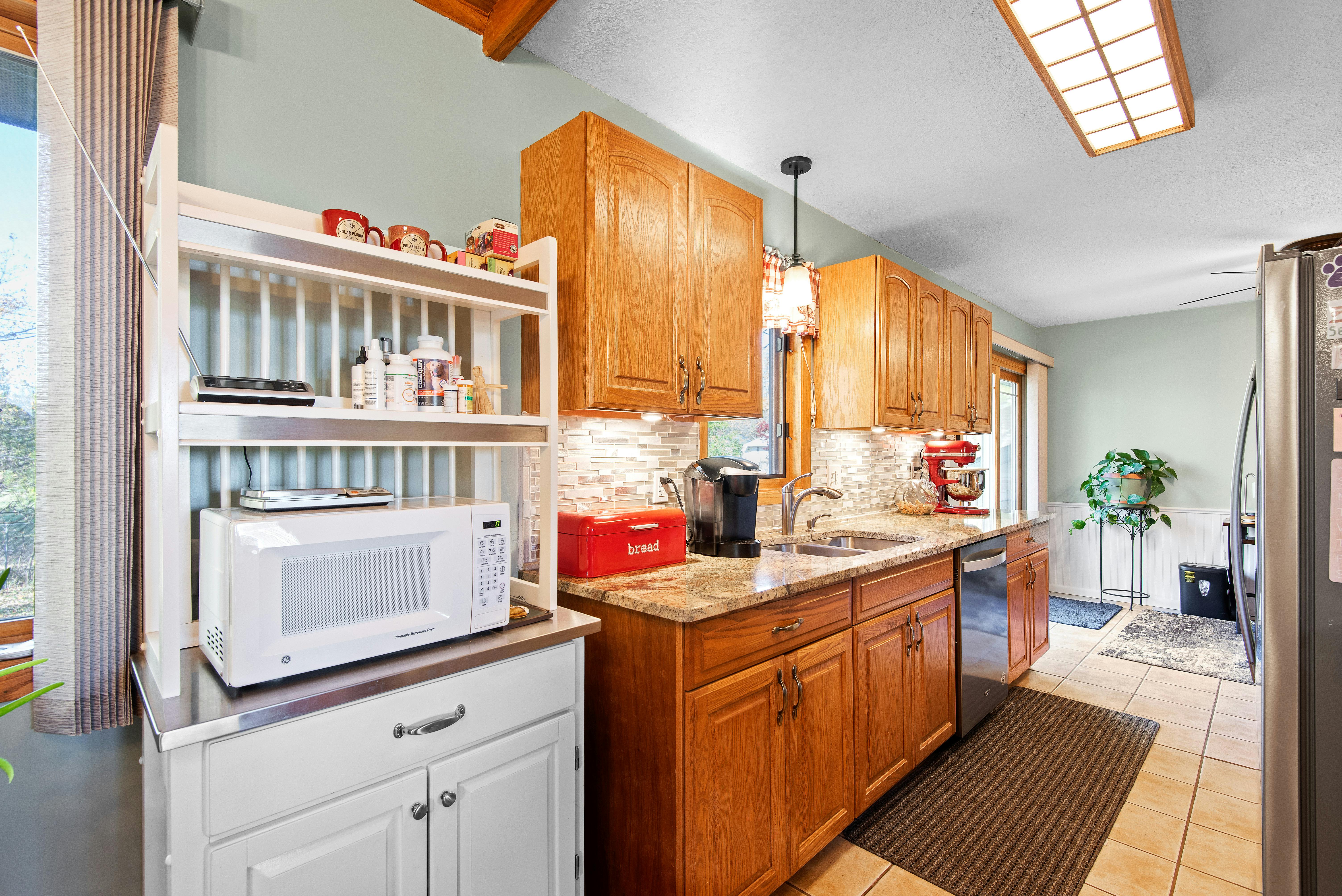
What a household actually cooks is shaped less by ambition than by storage. Ingredients that are visible and reachable get used, and the rest slowly become inventory.
Visibility beats intention
Cooking decisions are usually made quickly, often while tired, and the options considered are the ones the cook can see without searching.
An ingredient at the back of a deep cupboard is functionally absent, because retrieving it requires a decision that has already been made against by then.
Which is why moving a jar to the front of a shelf changes how often it is used far more reliably than resolving to use it more.
Containers set the unit of use
A large bag of something is opened, partly used, and closed badly, after which the remainder degrades and the next use is less appealing.
Decanting into containers sized to a normal cooking quantity removes that friction, since each use starts with something in good condition.
The same logic applies to the freezer, where a single large block of anything is effectively unusable on a weeknight while portioned pieces are not.
Cold storage geometry drives waste
Refrigerators are deep, and the back of a shelf is the least visible space in the kitchen, which is where forgotten food accumulates.
Temperature is not uniform either, with the door significantly warmer than the interior, so items stored there spoil faster than their dates suggest.
Arranging by how soon something needs eating rather than by category keeps the urgent items in view, which addresses the cause rather than the symptom.
Reach determines which techniques survive
Equipment stored in an inconvenient place is used for planned cooking and never for improvisation, which removes it from most weeknight meals.
A heavy appliance that lives in a low cupboard is a weekend tool regardless of how useful it would be on a Tuesday.
Kitchens that produce varied everyday food generally keep a small number of things permanently within reach rather than owning less equipment overall.
Spices degrade quietly and skew everything
Ground spices lose their volatile aromatics steadily once opened, and the decline is gradual enough that a cook adjusts upward without noticing.
Storing them near the hob accelerates this considerably, since heat, light and steam all drive the loss faster than a cool dark cupboard would.
A dish that once worked and now tastes flat with the same measurements is frequently a storage problem rather than a technique problem.