
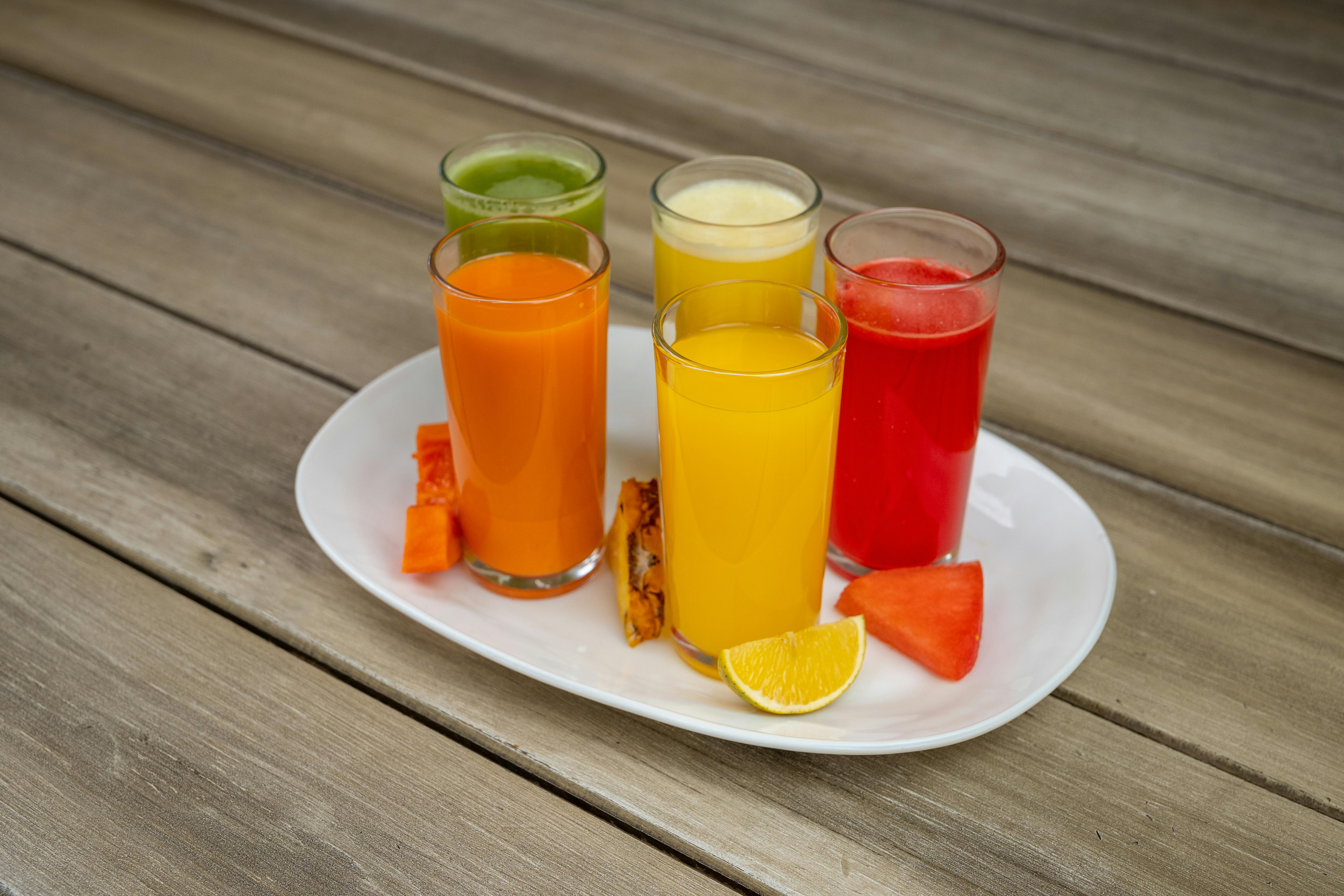
Indian cold drinks made at home rarely start from raw fruit or flowers at the moment of serving. They start from a thick sweet concentrate that was made earlier and keeps, and that structure is doing several jobs simultaneously.
Sugar concentration is what keeps the base stable
A heavily sweetened syrup holds so little available water that most spoilage organisms cannot grow in it. The sugar is a preservative before it is a sweetener.
That is why a bottle of rose or khus concentrate sits in a pantry for a long stretch while the fruit it came from would have gone in days. Dilution is deferred until the glass.
Once diluted the protection is gone, so a mixed pitcher belongs in the refrigerator and gets treated like any other perishable drink. Published home food-safety guidance covers how long prepared drinks should stay out.
Flavor compounds need a solvent and time
Petals, seeds and citrus peel hold aromatic compounds that release slowly. Simmering them in sugar syrup, or steeping them in it, pulls those compounds out and holds them in suspension.
A quick stir into cold water cannot do this. The flavor of a good sherbet is a product of extraction time, which is why the base is made as a separate step.
Sugar also carries aroma on the palate, giving the diluted drink more presence than the same infusion made without it.
Dilution becomes an adjustable variable
Because the base is concentrated, one household can pour a strong glass and another a mild one from the same bottle. Strength stops being fixed at the time of cooking.
It also lets the same concentrate go into plain water, sparkling water, milk or a yogurt drink without rebalancing anything. The sweetness travels; the format changes.
Street vendors work the same way for the same reason, holding syrups in bottles and building each glass to order rather than batching a finished drink.
Sourcing this in an American kitchen
Indian groceries in the US carry bottled rose, khus and kokum concentrates on ambient shelves, and those are a reasonable starting point for anyone not making a base from scratch.
For homemade versions, a regular supermarket supplies the essentials: granulated sugar, lemons and limes, fresh ginger and mint. Dried hibiscus and food-grade rose water turn up in the international or baking aisles.
Measuring by US cups is fine here, since a syrup is forgiving. Roughly equal volumes of sugar and water simmered briefly gives a base thin enough to pour cold.
Acid is the part people leave out
Nearly every traditional cooler carries a sour element, from lime, tamarind, kokum or raw mango. Without it a sweet drink reads as heavy after the first few sips.
Acid also brightens aroma, making a rose or mint base taste more like itself rather than merely sweet. It is the difference between a syrup drink and a genuine cooler.
Salt does a related job in savory versions, sharpening flavor and making the drink more satisfying in hot weather than plain sugar water ever is.