
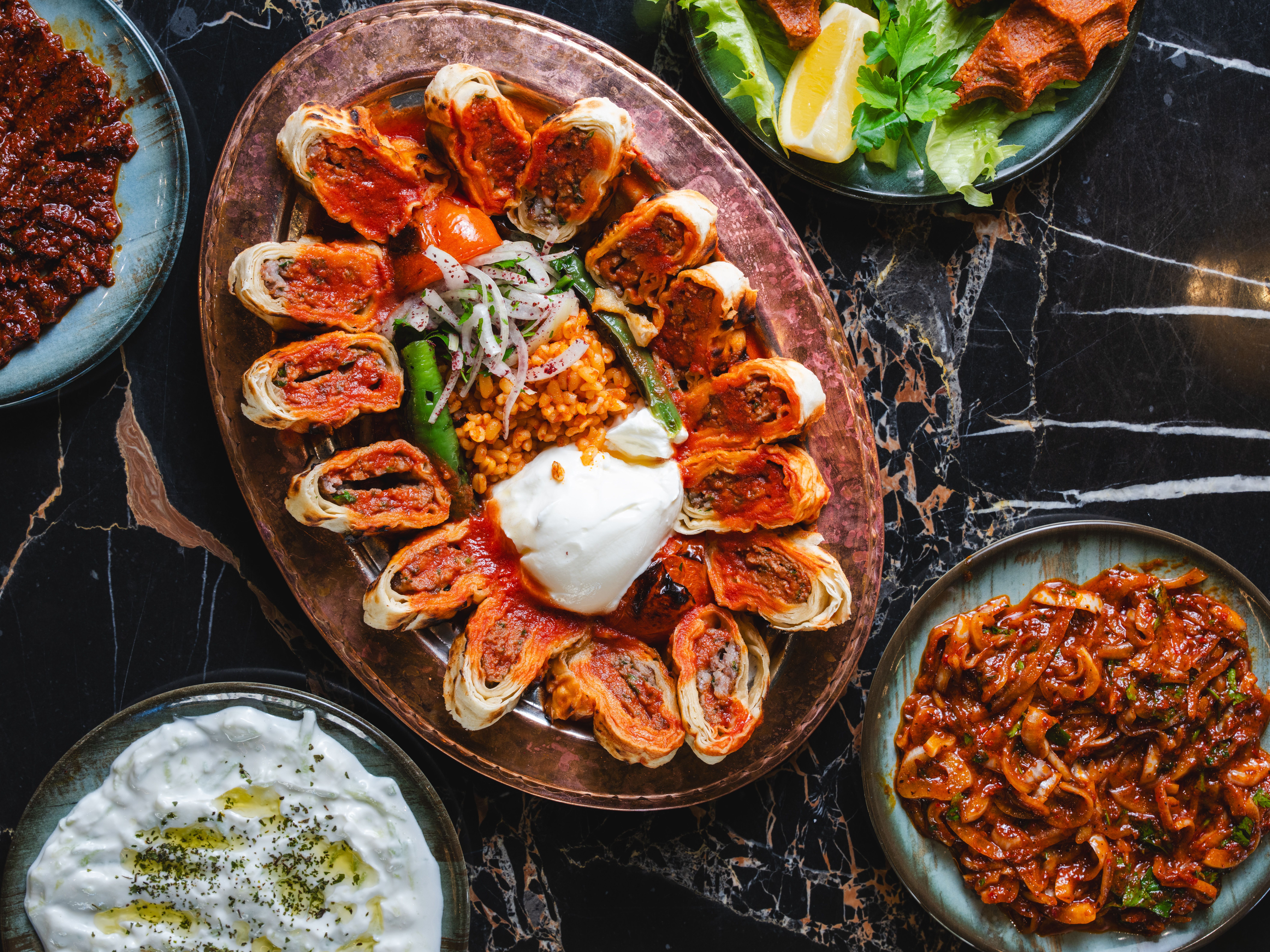
Cuisines that developed in isolation from one another arrived at the same structural pair: a characteristic fat and a characteristic acid. The convergence is functional rather than coincidental.
Fat is the aroma delivery system
Most of what we perceive as flavour is aroma, and a large proportion of aroma compounds dissolve in fat rather than in water.
A cooking fat therefore acts as a solvent, pulling aromatic molecules out of spices and aromatics and distributing them evenly through a dish.
Which is why frying whole spices in oil produces a different result from boiling them in water, even with identical quantities and time.
Acid works against richness and dullness
Fat coats the tongue and lingers, and a dish built only on fat and salt registers as heavy after a few mouthfuls.
Acid cuts through that coating and resets the palate, which is why so many rich dishes arrive with a wedge of citrus, a pickle or a vinegar-dressed side.
Acid also brightens ingredients that have been cooked long enough to lose their own edge, restoring definition to a stew that has gone flat.
Local availability picked the specific pair
Which fat and which acid a tradition settled on followed from climate and agriculture rather than from taste alone.
Olive groves, dairy herds, oilseed crops and coconut palms each produced a fat suited to the region, and each brought its own aroma and smoke behaviour.
Acids followed the same logic, with citrus, fermented products, tamarind, vinegar and soured dairy appearing where the raw material grew or kept.
The pair explains substitution failures
Swapping one fat for another in a traditional recipe often disappoints, because the original fat contributed flavour rather than only lubrication.
The same applies to acids. Replacing tamarind with lemon delivers sourness but discards the depth and slight sweetness the original carried.
Successful substitution usually means matching the function first and then correcting for what the replacement lacks, rather than swapping by category.
Where a dish tastes wrong, one is missing
Home cooks who report that a dish tastes close but not right are frequently short on acid rather than salt, since salt is the correction people reach for automatically.
A dish that tastes thin despite adequate seasoning is often short on fat, which would have carried aromas that are currently trapped.
Tasting for the pair explicitly, before adjusting anything else, resolves a surprising share of dishes that seem inexplicably dull.