
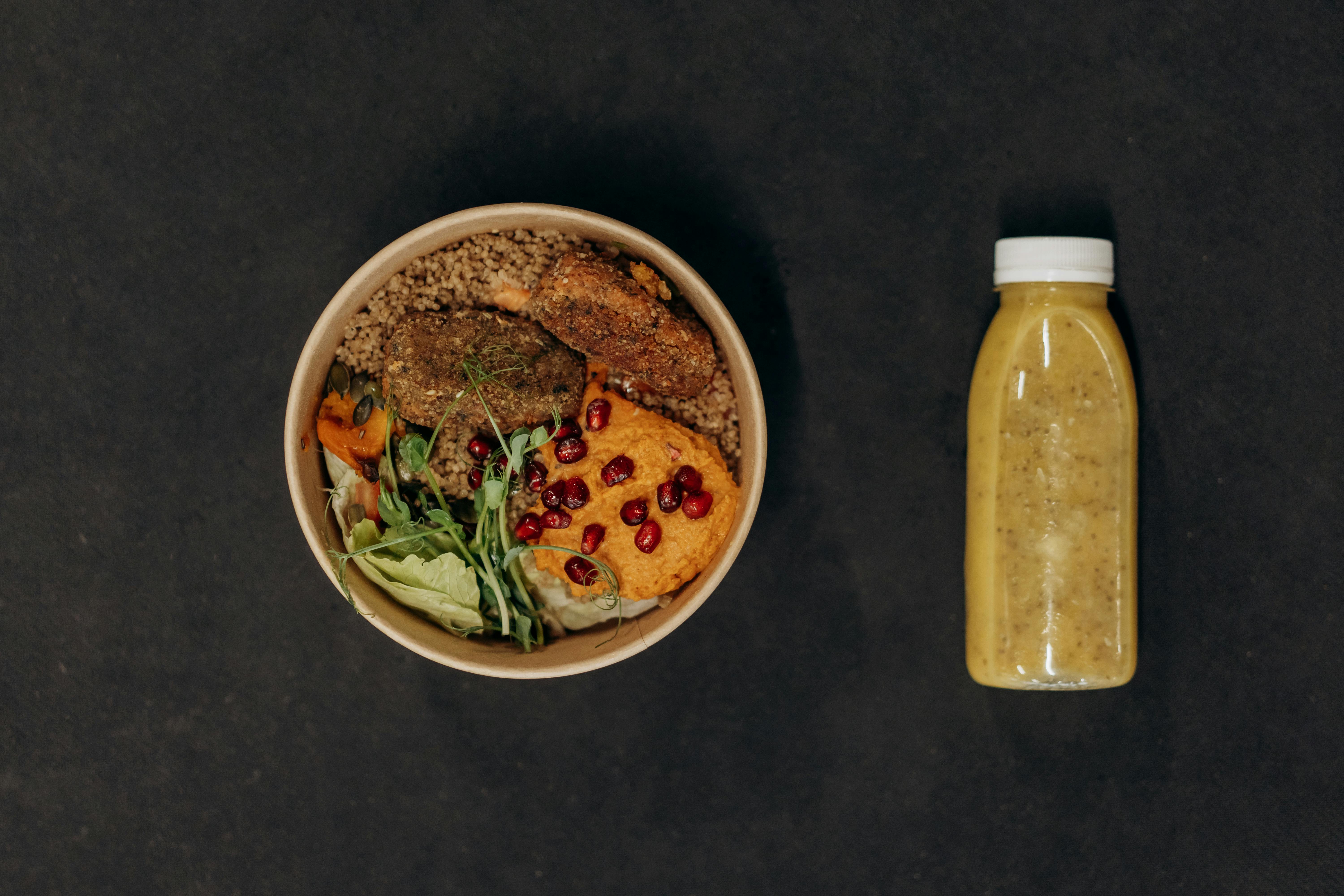
For four months I had lunch delivered from a small tiffin service run by a woman who cooked for about thirty people out of her own kitchen. It was not remarkable food and it was extremely well judged, and I only understood why after I stopped.
The proportions were consistent
Every box, every day, had the same structure. A large portion of grain. A generous dal or similar. A dry vegetable. A small amount of something pickled or raw. Occasionally a sweet, small.
The proportions did not vary. What varied was what filled each slot.
When I cook for myself, the proportions swing wildly depending on what I feel like. Some days it is almost entirely one thing. That variability is normal and it is also why some meals leave you hungry an hour later and others leave you uncomfortable.
The vegetable portion was smaller than I would serve
This surprised me, given how much modern advice pushes toward vegetables.
The dry vegetable in the box was maybe three or four tablespoons. Not a large serving by any contemporary standard.
What it did was provide contrast and interest rather than bulk. The bulk came from the grain and the dal.
I have come to think this is a more workable structure than the plate-half-vegetables model, at least for the way I eat, because it puts the interesting element in a position where it stays interesting rather than becoming the thing you have to get through.
There was always something sour
In every single box, without exception. A pickle, a chutney, some raw onion with lime, a spoon of yoghurt.
I had treated these as optional extras. In her boxes they were structural, and their absence was immediately noticeable on the two occasions it happened.
What they do is reset the palate. A meal of soft, warm, similarly-seasoned components becomes monotonous by the middle. Something sharp and cold interrupts that and makes the next mouthful taste like the first one did.
This is the single thing I took most directly from those four months, and it costs nothing.
The quantity was fixed and I stopped thinking about it
An underrated effect. Because the box was the box, there was no decision about how much to eat.
Cooking for yourself involves continuous portioning decisions, and those decisions are made while hungry, which is not when people make good ones.
A fixed portion, decided by somebody else, at a size that is reasonable, removes that entirely. I ate less than I would have served myself and never felt short.
When I went back to cooking for myself I started portioning into a container before eating rather than serving from the pot, which reproduces some of this.
Repetition was the point, not a failing
The menu rotated on something like a two week cycle. The same things came round regularly.
I expected to get bored. I did not, and I think the reason is that within the repetition there was variation in the details — the vegetable of the day, the pickle, the seasoning.
Modern food culture treats repetition as a problem to be solved with novelty. Most traditional eating is highly repetitive and the variation happens at a smaller scale.
Having lived with both, the repetitive version was easier, cheaper, less wasteful and no less enjoyable.
What I could not reproduce
The freshness. Everything arrived having been cooked within about two hours. Vegetables cooked that morning taste different from vegetables cooked on Sunday, and there is no storage technique that closes the gap.
And the fact that somebody else decided. That sounds trivial and it is a real cognitive saving over four months.
What I changed permanently
Something sour with every meal, without exception.
Portioning before eating rather than serving from the pot.
A smaller, more interesting vegetable portion rather than a large dutiful one.
And a shorter rotation of dishes than I used to attempt, on the basis that I now know I do not get bored as fast as I thought.
None of this is advice about nutrition, which is not my field. It is about the structure of a meal, which turns out to be the thing that determines whether you are satisfied by it.
The cost, which surprised me
Worth mentioning because it undercuts an assumption I had.
The monthly cost of the service was slightly less than what I had been spending on lunch ingredients, and considerably less than what I spent on the days I gave up and bought something.
That is possible because she bought in quantity, cooked in quantity, and wasted almost nothing. A domestic kitchen cooking for one wastes a surprising proportion of what it buys, and that waste is invisible because it happens gradually.
I do not think this generalises to every service. It does suggest that the comparison people make, between a delivered meal and the raw cost of ingredients, is not the right comparison, because it ignores everything that goes off in the drawer.