
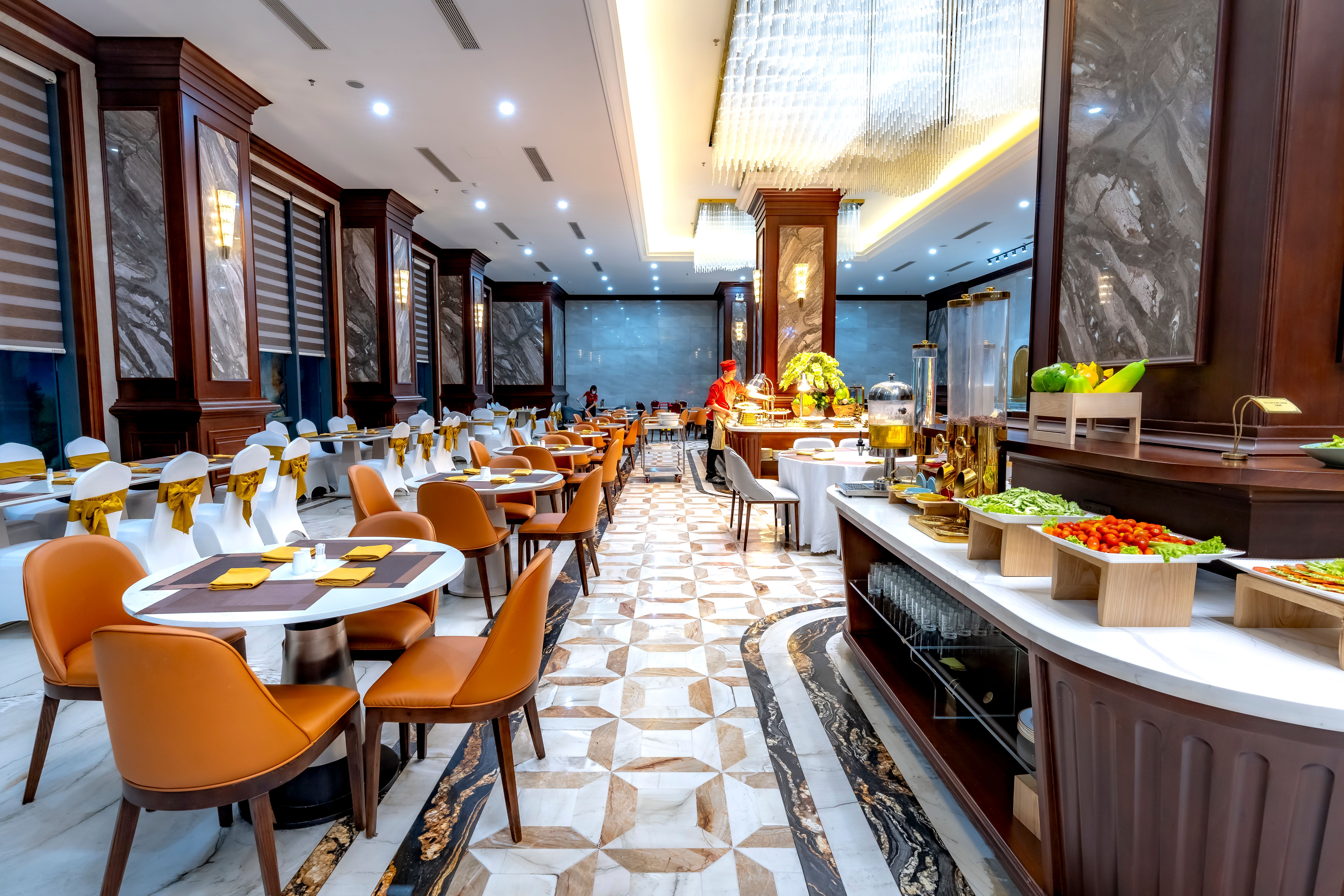
The midday buffet is a fixture of Indian restaurants across the US, and the food in it is not the same food served from the dinner menu. Holding conditions rewrite the recipes.
Sustained heat continues to cook
A dish sitting in a steam table keeps cooking slowly for as long as it is held, so anything placed there fully cooked will be overcooked within the hour.
Kitchens compensate by pulling vegetables earlier and by choosing items that tolerate the extra time without collapsing.
That is why buffets lean toward dishes with robust ingredients and away from anything whose appeal depends on being served the moment it is finished.
Sauces are built to resist separating
Emulsions break under long heat, and dairy-thickened gravies are especially prone to splitting or forming a skin on the surface.
Buffet versions therefore carry more starch or more onion-and-tomato body, which holds together over hours and survives being stirred repeatedly.
The texture is consequently thicker and more uniform than the plated version of the same dish, which diners often read as the restaurant's house style.
Seasoning is pitched at the average plate
Nobody adjusts a buffet tray to the person taking from it, so heat and salt are set where the widest range of diners will accept them.
Aromatic finishes such as fresh herbs, a late tempering or a squeeze of citrus fade quickly under a heat lamp, so they are often applied lightly or skipped.
The result is food that reads as milder and flatter than the same kitchen produces at dinner, which is a holding constraint rather than a judgment about the diner.
Safe holding drives the schedule
Hot-held food must stay above a temperature range where bacteria multiply readily, and trays are monitored and rotated for that reason rather than for freshness alone.
Food-safety guidance published by the FDA and state health departments covers hot holding, replenishment and how long prepared food may be displayed.
Practically, arriving near the start of service rather than the end gets food that has spent less time in the tray, which is the main quality variable a diner controls.
What buffets are genuinely good at
Dishes that improve on standing, particularly braised legumes and slow-cooked meat curries, are better at a buffet than they would be cooked to order.
Breads made continuously and brought out hot avoid the holding problem entirely, which is why the bread station tends to be the strongest part.
Judging a kitchen by its buffet therefore measures the wrong thing, and ordering one plated dish from the menu tells you more about what it can do.