
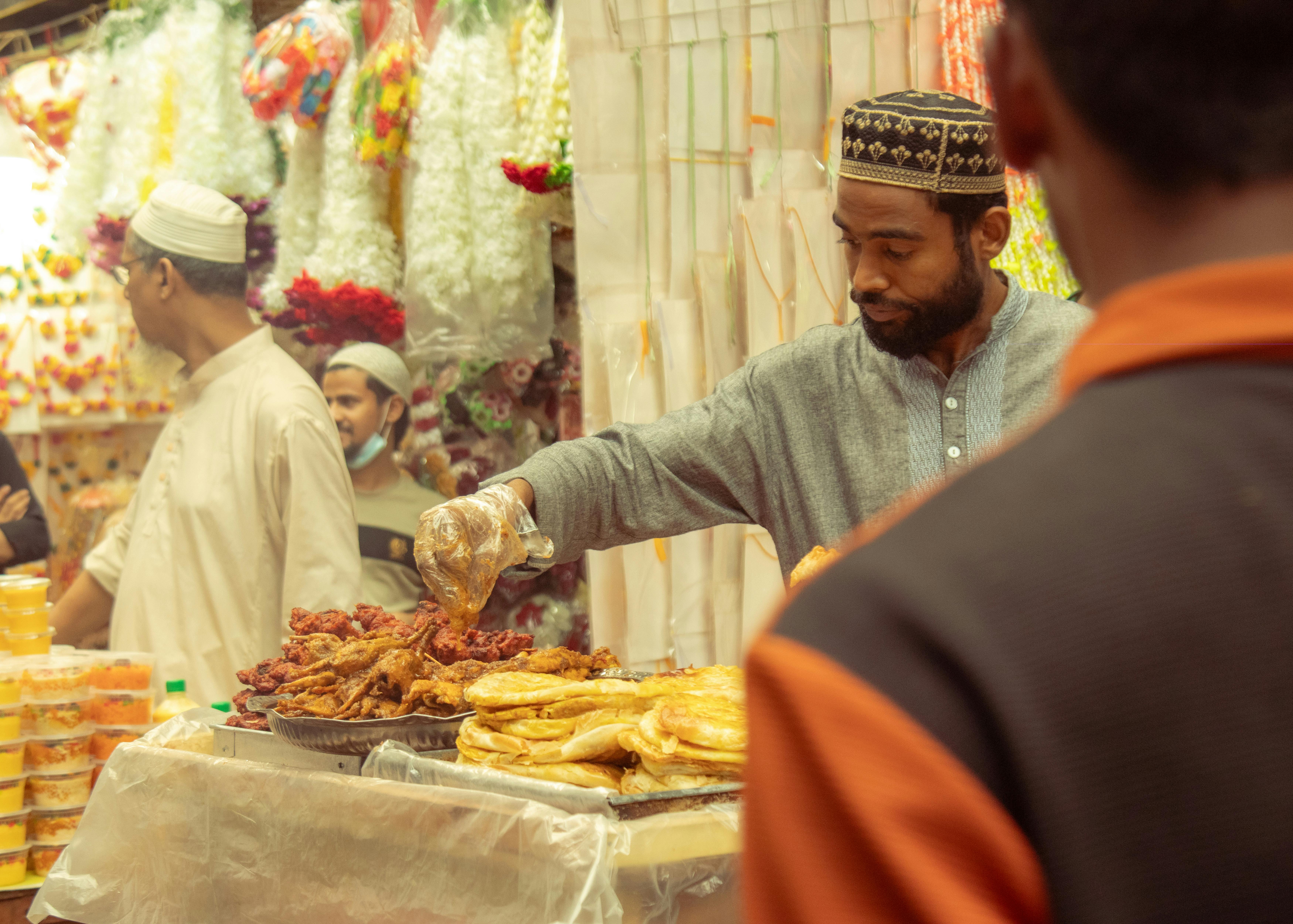
Street vendors who sell one dish and nothing else are common in every city with a street food culture. The narrowness is a deliberate economic structure rather than a limitation.
One dish means one inventory
A vendor selling a single item buys a short list of ingredients in predictable quantities and can estimate the day's requirement closely.
Anything left unsold is a direct loss, since most street preparations cannot be held overnight without refrigeration or quality loss.
Narrowing the offering narrows the forecasting problem, which is the difference between a small margin and no margin at all.
Volume is where the money is
Per-serving margins on street food are thin, so viability depends on the number of servings rather than on the price of each.
Serving speed therefore translates directly into income, and speed comes from repetition of an identical sequence.
A second dish halves the repetitions of the first and introduces decisions between orders, both of which reduce throughput more than the extra sales add.
Reputation concentrates on one thing
Customers travel for a specific dish, and a vendor known for one item benefits from every recommendation reinforcing the same association.
A varied cart competes with restaurants on breadth, which is a comparison it cannot win, and it dilutes the reason anyone would seek it out.
Which is why long-established stalls tend to narrow over time rather than expand, having discovered which item carried the business.
Location and timing are part of the product
Single-dish vendors position themselves where their dish is wanted at the hour they sell it, and the pairing of dish to time of day is deliberate.
Breakfast items, afternoon snacks and late-night food occupy different slots, and a vendor's whole operation is built around one of them.
That focus allows the preparation schedule to be fixed, with cooking finishing shortly before the selling window opens.
The model is fragile in specific ways
Dependence on a single dish means a supply problem with one ingredient stops the business entirely rather than reducing it.
Weather, roadworks and changes in foot traffic hit harder than they would a vendor with a broader draw, since the customer base is tied to a particular flow of people.
Vendors manage this through relationships with suppliers and through fixed positions held for years, both of which are assets that do not appear on the cart.