
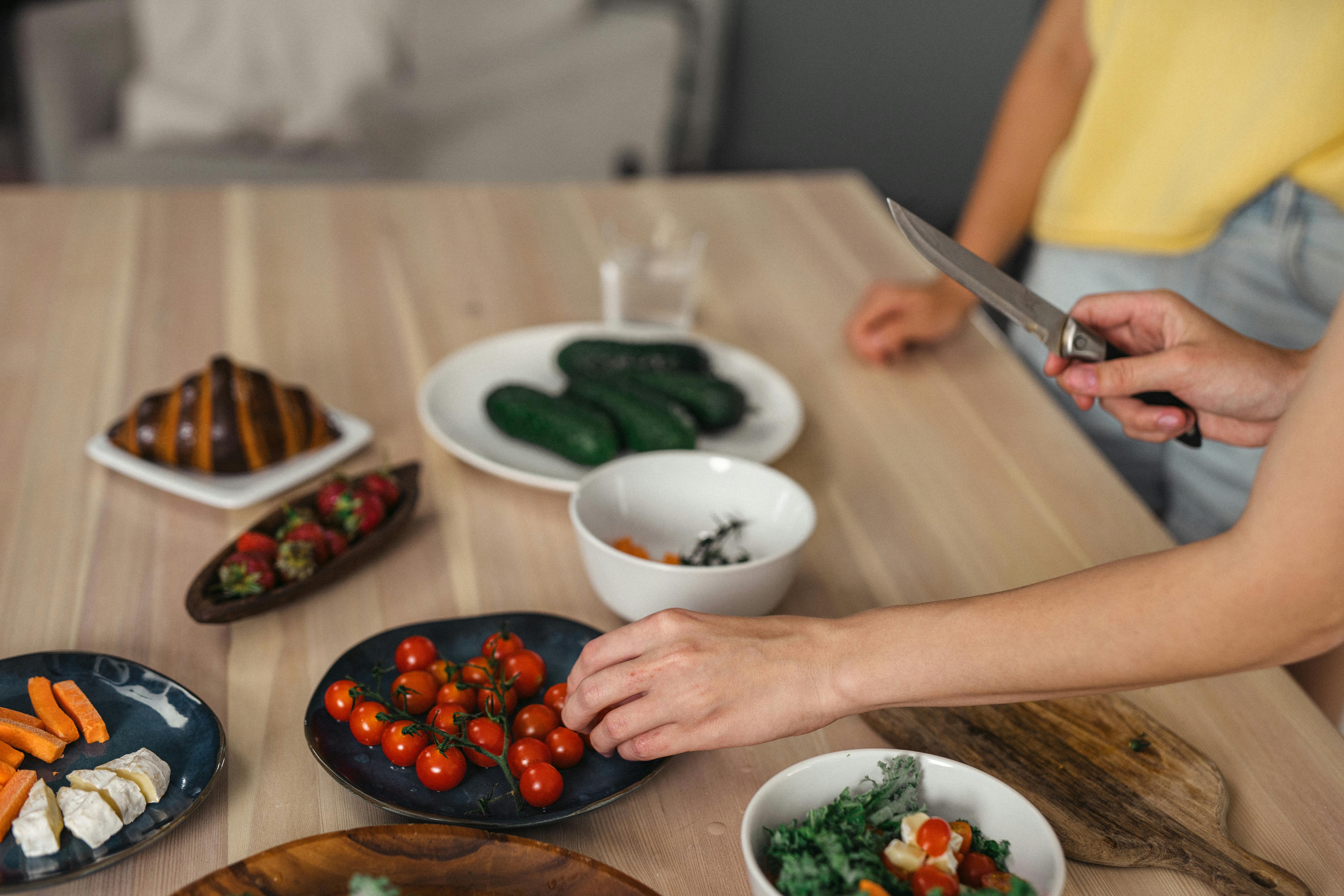
How much a person eats at a given meal tracks the size of the container more closely than it tracks hunger. For anyone cooking in advance, that makes containers a design decision.
Volume cues override internal ones
Fullness signals arrive slowly, well after eating has finished, so the decision about how much to serve is made before the body has anything to say about it.
In the absence of that signal, people rely on visual cues, and the dominant cue is how full the container looks rather than how much it holds.
Which means the same quantity reads as generous in a small box and meagre in a large one, and the reading influences whether more is added.
Packing before eating separates the decisions
Portioning at the moment of cooking is done while calm and not yet hungry, which is a different decision from portioning at the moment of eating.
Once a meal is in its container, the effort required to change the amount is enough to make the earlier decision stick most of the time.
This is the main practical advantage of batch cooking into individual containers rather than into one large one that is served from each day.
Shape changes the perception
Tall narrow containers appear to hold more than wide shallow ones of identical volume, because height reads as quantity more strongly than width does.
Spreading food across a wide surface makes it look sparse, which is why the same lunch feels different in a flat box than in a deep one.
Compartmented containers exploit this deliberately, holding components apart so each looks like a complete element rather than a small share of a pile.
Container size sets the recipe scale
Cooks who prep regularly tend to scale recipes to fill the containers they own rather than the other way around, which quietly fixes portion size for months.
Buying a set one size larger tends to increase what gets cooked and eaten, since a partly filled container looks wrong and invites topping up.
Choosing containers deliberately, and keeping only one or two sizes, removes a variable that otherwise drifts without anyone deciding anything.
The same effect operates at the table
Serving from a large communal dish placed on the table leads to more being eaten than serving plated portions from the kitchen, for the same visual reasons.
Keeping the serving dish away from the table restores a small amount of friction, which is usually enough to reintroduce a conscious decision.
None of this is about restriction; it is about noticing that the vessel is making a choice that the eater assumes they are making.